




What we see has always been mediated. Determined by choices, both ours and those not our own.
Millions of small moments over the course of our lifetime determine how we look at the world, the people around us, at 'hair', and 'trash', and 'teeth'.
The images our minds conjure up when prompted by these words differ greatly across people, across time.
I grew up obsessed with stories, listening to them, telling them. Every interesting moment in my life instigated the thought, "this would make a cool story some day."
My whole childhood was spent exploring far-off worlds, but this exploration was always mediated by paper or screen.
Text, images, and sounds rather than tactile reality were how I experienced the world from within my room.
I did not really like being around other people as a child, not because I didn't like them, but because the fear that they wouldn't like me already consumed me.
So I spent all my time daydreaming, reading, and watching films or television.
I wasn't always interested in photography.
The desire to photograph was precipitated by my love for narratives, for poetry, and cinema.
Stories have always been integral to my photography. I knew early on that I liked to invent realities and fabricate moments.
A story found out in the world didn't belong to me, and held little meaning to me if it hadn't been infused with meaning by its creator.
Photography has always been a way for me to translate my feelings, my thoughts, and my daydreams into visible worlds which others may inhabit, if only for a brief moment.
I do not like to capture moments that just so happen to encapsulate an emotion or hold meaning or tell a story, because even if such a moment evokes emotion or meaning in a viewer, I am far too aware of the fact that I did not intend to create that meaning.
Playing with the expectation of honesty inherent to photography as a medium is integral to the work I like to create. Presenting something constructed through a medium that instills an expectation of reality and truth in the viewer allows me to make ideas more real than they otherwise would be.
Focusing on a subject without an underlying story or concept was an extremely foreign way of approaching photography for me.
I have enjoyed taking pictures out in the world before, but mostly of the people and moments I have loved. For capturing memories, not for generating new meaning.
I found myself constantly being forced to resist creating a story inspired by the subject, because every time I had a concept or story, I would realise I cannot execute my ideas in time.
Creating images that aren't deeply contrived, staged, conceptualised, and thought through, was an incredible challenge for me.
Throughout this term I struggled with the feeling that everything I was doing was meaningless. Each image was created with a few minutes' worth of thought, were very literal, and largely focused on a straightforward representation of the subject.
I have never loved focusing on aesthetics, even as a visual artist, because I find the hierarchical binary logic of beauty inherently unethical. Maybe just because I could never be mistaken for something beautiful.
Beauty has never been a goal of my work, it is always incidental. But this exercise made it feel essential. Creating images where aesthetic features weren't serving a narrative goal made all my choices feel arbitrary and meaningless.
I understand that the goal of the exercise was to see how differently everyone would instinctively 'see' the subject, before words or thoughts got a chance to become too involved.
A project like this felt like anathema to someone like me, for whom writing and conceptualising is so integral to his process.
All of this came at a time when my life was in flux; things were changing, people were leaving, and everything felt unmoored.
Creating work that felt unlike me in this moment was especially hard, and I think I avoided really engaging with the work as a result.
A lot of the images I created were a consequence of just knowing I have to submit something, not of wanting to truly make something new.
None of the exercises feel like a true representation of how I instinctively see the world, because my first instinct was always too hard to execute. But ultimately, the images still reveal other truths about how I see and how I work. They reveal my hesitance and resistance to change, they reveal my reliance on narratives as a crutch, and they reveal what in the real world, rather than just in my head, looks to me like 'hair', 'trash', or 'teeth'.
Hair


My relationship with hair has always been very complicated. I grew up in a Sikh family, where hair is sacred. You usually cannot cut your hair. My first time ever cutting my hair was at the age of 13, almost 14, and it wasn't an easy decision. My parents, aunts, uncles, grandparents, everyone had the opportunity to weigh in. To many, it meant me abandoning faith.
I was never religious, I had been an atheist long before I turned 13. But the prospect of turning my back on something everyone in my community believed was still a tall order. Ultimately, I did cut my hair. I went from having hair down to my knees, to just a few inches on the top of my head.
For the longest time afterwards, maybe even till today, I used my hair to hide. I spent years in school being chastised and ridiculed for having hair that covered my eyes and half my face or hair that was 'too long' for a boy.
I had hoped to explore this history. The idea of working on a project about hair excited me. But then I realised I had about three days to submit something.
I had no time to think about how I felt about hair, and what narrative or image would capture those feelings.
Beyond that, I didn't know any Sikh people in Vienna, I didn't know anyone with long hair who had time, I didn't have access to a wig, a studio, anything on such short notice.
I knew I wanted to work with real hair on real people, and head hair specifically, so I asked my roommate. She only had a few minutes. I happened to have some lights I had rented the week prior for another project.
I positioned her in our foyer in between a hallway and a bathroom door, so I could use the walls and doorways to flag the light. I positioned a light on either side of her, asked her to wear something black, wet her hair, flip it over her face, and began taking pictures.
In terms of execution and conceptualisation, it was technically easy. The topic was hair, and I took pictures of hair. It only took a few minutes. But suppressing the urge to do something more, to explore what hair means to me and what stories are tangled within, that was very, very hard.


Trash
Trash is, unfortunately, a big part of my life.
As someone with ADHD and a whole host of other things going on, I often—or really always—struggle with keeping my surroundings clean and organised. I think for many people who struggle with disability, mental illness, or even neurodivergence, during bad episodes trash often accumulates and turns into something insurmountable.
I often don't feel like a real functioning person and a big reason why is that my room often resembles a trash heap. The word trash evokes immense shame in me, because it makes me viscerally aware of my limitations and failures. Trash makes me isolate, it makes me keep the lights off in my room, it makes me slam my bedroom door behind me before anyone can peek in, and only ever open it a crack to enter or exit. It makes me sneak trash-bags out of my room at four in the morning when everyone is asleep so they don't know how bad it's gotten. Because trash is everywhere.
I chose to take pictures in my room, using a light to illuminate the trash for once. Forcing myself to look at it, to confront its presence.
The images were vague and shot narrow enough that no one would be able to tell they were taken in someone's room. This exercise was hard, emotionally, because I was constantly debating if I wanted to put this part of my life on display. Ultimately my shame and embarrassment won out. I illuminated the trash but erased the context.


A Dangerous Place
One of the more cliché beliefs often explored in art is that the mind is 'a dangerous place'.
I wondered, at first, if this was an idea to which I wanted to give credence.
I spend a lot of my time, maybe most of it, in my mind, so turning on it felt unfair.
But someplace you spend too much time is dangerous in its own way, preventing escape. Beyond this though, my mind has played a part in causing most of the problems I've faced in my life. It can be dangerous. But I didn't have the time to really explore my feelings about this, and never got to the stage of considering visual depiction. I have also always felt that the prospect of acknowledging to myself that I occupy this body—my body—is terrifying, but I was never going to photograph myself or any aspect of my body, and I wasn't able to explore other possibilities within the limited time we had.
During the weekend we had this exercise, we hosted a friendsgiving dinner at our apartment.
We've done something like this every year since 2022. Leading up to that dinner I was choking on anxiety.
Each year excepting 2024, these dinners had been some of the most difficult places for me to navigate. Even surrounded by friends I always found myself feeling hated, repulsive and inhuman at these dinners. I don't know why it was always these dinners, but something would always happen that'd make me spiral.
Later in the night when it was just a few of my closest friends left, I took a quick picture of some of them from the corner. I wasn't sure at first. It was really just a snapshot, taken from where I was sitting, no thought to light or composition or anything. I just remember thinking even a room full of your favourite people can feel dangerous, even terrifying.
Later that week we had dinner again with a friend. While all of these people are my closest friends, I have always felt like I am on the outside looking in. I don't know if I am truly excluded or if I exclude myself in anticipation of rejection. But as I sat in the corner reading a book I glanced up to see them sitting together on the dining table under the glow of a lamp and snapped a quick photo. There were my closest friends, I was on the outside looking at them, maybe because they felt too dangerous to sit with. It felt like a better encapsulation of the initial snapshot from the past weekend. This distance as a measure of self protection just betrays an unfortunate truth, that even in community I feel the need to insulate myself, that even amongst friends I sense danger and feel fear.
I have always loved exploring and spending time in the basements of the university. All three buildings have weird things in their basements. Sights that may resemble a dangerous place, but for me evoke wonder and fear in equal measure. I went down there a few times that week, alone and then with some of the same friends as before. I think even unintentionally, some of the images capture more than just a scary industrial basement. The image of the hand grasping the door feels like someone trying to invade a safe space, turning it into somewhere dangerous, and the person facing a distant corner wall evokes self-imposed loneliness, at least for me. Maybe that's just the way I see it.
This exercise was easier than the first two at first, but I spent the most time on it and took the most images. I don't really like most of these images, but it's okay. The exercise did force me to recall and readdress my fear of being truly seen, and accept that it comes from a fear of being rejected once seen.
Some of the images reminded me of pictures I had taken of my friends before and ones I've taken since, always from a distance, never as one of them. I despise being photographed, so not being in pictures isn't a problem. It is just the realisation that I am always in the right spot to take a picture of them, on the outside, observing but not participating.


Myth
Maria had already told us that the prompt for the week after text and image was going to be myth, so I had a whole week longer to sit with the topic this time.
Despite knowing the theme early, I still didn't really get to think about it too much because I was going to be travelling that week and had a lot going on in my personal life. I knew I did not want to participate in the text and image topic, so that same day after the ZKF I went back down to the basement of the Georg-Coch-Platz building. I remembered this locker room with pink tiles, and a mirror that reflected the same tiles it was surrounded by. I thought it looked like a void, something you could get lost in. Not just like a portal, but like Narcissus who fell in love with his reflection in a pool of water. I thought a bathroom mirror reflecting a shower stall was a funny way to reference that myth. I also had spotted these huge drawer chests that seemed like old PO boxes. During the dangerous place week I had taken a picture of one of these drawers open with a light coming out of them. It reminded me of pandora's box, so I repeated the image, but asked my friend to put his hand in front of the box.
The following week while travelling, I instinctively took a picture of my friend as he was headed down to the beach. I wasn't thinking about myths at the time. When I developed and scanned the image however, I realised that it fit this topic very well. It looked like a man staring out at an unfathomable see, ready to descend upon it. It reminded me of narratives like the story of Odysseus, and the hero's journey.
This exercise felt easier than most others, but was surprising. I would have hoped to build a myth with my own narrative, or at least reproduce one, either way with intention. Instead, I took very straightforward images. Some constructed, but the most fitting one found out in the world. And more, an image to which I assigned meaning retroactively, in complete opposition to how I generally see my practice. I'm still not sure how I feel about it.


Teeth
We had a long time to work on the topic of teeth, but unfortunately due to how busy I was over the holidays, I only remembered I had to do it on the Monday it was due.
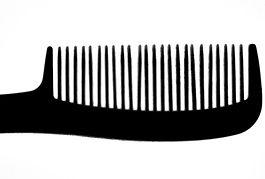
I didn't really think about it at all. My first thought was objects with features that are referred to as teeth, like the teeth of a key, of a comb, or of barbed wire. I had a roll of barbed wire lying around from a photographer acquaintance who was getting rid of old props, so I decided to start with that. I placed the objects, one by one, on the small light table I use to scan my film, and began photographing. I tried a few different things here and there. Using a laser to draw shapes on the objects and so on to lend the images a more industrial scan feel, but ultimately changed my mind. I also considered photographing a friend's retainers, and the earring she wears of her boyfriend's tooth, but I had no time to visit her.
This was the easiest of the projects, only because I had no time to even entertain the thought that I could do something else. I was filled with regret in the aftermath though. I wish I had found the time to explore the intimacy of boxes of baby teeth, childhood memories of teeth falling out, the politics of beauty implicit in braces and orthodontics, and later memories of the visceral pain of having a tooth knocked out of your mouth.


Satisfaction is a very broad emotion, because it can be felt in both big and small ways. I do not believe I have ever felt satisfied in the big way. Maybe someday I will.
Regardless, I no longer had much desire to ruminate and self-reflect after the way the past few weeks had gone. I had the longest to work on this topic, but I gave it the least amount of thought. I was at a shoot with some people for a different project, and since I already had lights set up, props available, and a model, I decided to use the opportunity. I took some pictures of the model eating ramen while sitting on a couch, with a book in the corner, and lights set up to mimic the glow of a tv. I wanted to capture satisfaction in the sense of satiety, and the comfort in being able to relax and unwind. I also took a picture in the same setting of her in a more pensive, despondent pose. I asked her to think about whether she feels she's satisfied with the life she has, and whether she feels she should be. I wanted to capture the uncertainty of what might satisfy.
I also later took a picture of one of my friends as he was smoking, because he looked, well, satisfied.
At some point near the end of the week I started thinking about the genre of 'satisfying' videos online, and how symmetry is often seen to be satisfying.
I took pictures of sunlight filtering through the edges of my curtains and casting patterns on my bedroom ceiling and walls. I see these patterns every morning, sometimes the light even splits into different colours.
I also took a picture of the sky through my living roon window. One side was cloudy and grey while the other was sunny. I thought the symmetry could be seen as satisfying.
I also took some pictures of buildings, again because symmetry and a definite end with leading lines both can seem satisfying.
The execution was easy and simple again, but because I never let it get difficult by thinking about it the way I would have liked to.
Satisfaction
I had hoped to also photograph Dunja for the last week. I figured since I didn't really know her, any attempt to capture her essence in images would not be earnest, unless I captured the process of getting to know her instead. The moments where someone slowly reveals parts of themselves, the act of connection and learning who someone is. Like looking at a photograph of someone and noticing all the little details they've chosen to reveal.
I would have asked her to tell me stories about herself, of people and places she had loved, fun tales from her childhood, and more. I would have photographed that act of storytelling as a way of getting to know someone, and tried to capture her stories—and her—in those images.
But because I didn't know her, instead of moving out of my comfort zone I ultimately decided not to bother. I had already taken images for 6 of the topics, so there was no need. I told myself I had too much going on, that she already has such a busy schedule and I shouldn't make it worse.
Since I was never able to actually do this exercise, perhaps it was the hardest. But it was the only concept I was really happy with, maybe just because it involved listening to someone's stories.
Most of these assignments were ultimately an exercise in failing to do what I wanted to do, and accepting that I am often my own biggest enemy. Creatively, and in life.
I found my photographic gaze is often motivated by what is most convenient and most comfortable, essentially the path of least resistance.
The way I see is filtered through my insecurities and anxieties, and riddled with a desire to do impossibly more and be unattainably better with no clarity on what either of those should look like.
I began thinking through and writing all of this at midnight and finished around 5 am, so I know I have perhaps been more vulnerable in my reflections than necessary, but it felt right and honest for once. Straight from my brain onto the keyboard, no changing my mind, no hedging, no editing.
The song I chose to include is Daydreaming by Radiohead. Despite their politics, their music has always been a big part of my life, and this song was one of my most played over this semester. I think in some ways it encapsulates my feelings about participating in all these exercises.